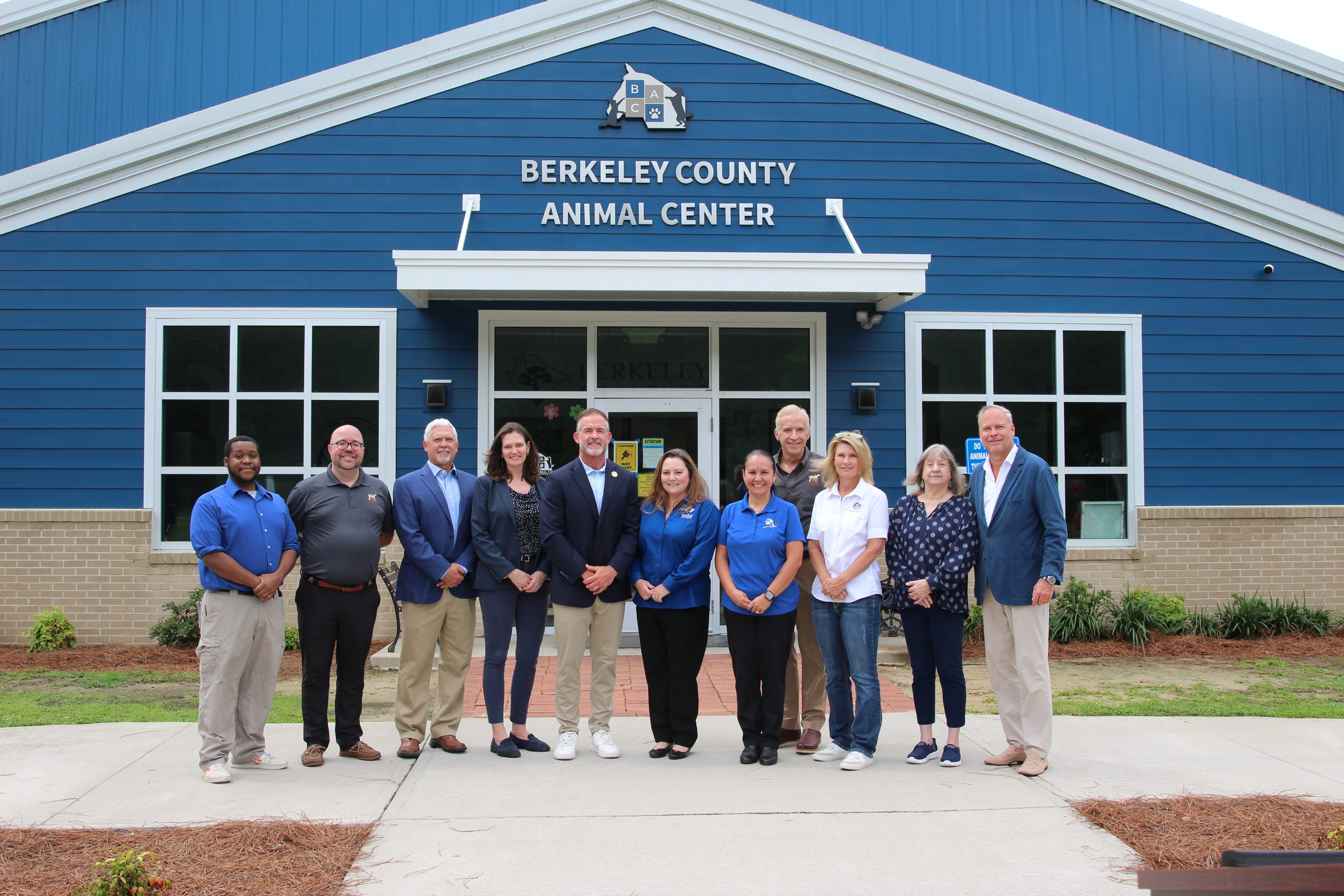
BERKELEY COUNTY, S.C. – Berkeley County and the Charleston Animal Society are joining forces to make life better for furry friends in the area. Berkeley County Council approved the partnership on May 27, and starting July 1, Charleston Animal Society will manage operations of the Berkeley Animal Center. It’s a move designed to handle the region’s fast-growing pet population while making animal services smarter and more efficient.
“This collaboration builds on a long-standing, positive relationship between Charleston Animal Society and Berkeley County,” said Berkeley County Supervisor Johnny Cribb. “With a shared commitment to animal welfare and community service, the partnership reflects more than a year and a half of careful planning and discussion.”
SEE ALSO:
Growing Pains Call for New Solutions
With more people—and pets—calling the tri-county area home, animal services have been feeling the squeeze. Charleston Animal Society CEO Joe Elmore noted, “Our region is growing fast, and that includes a rising population of dogs and cats. By joining forces, we can better serve our communities, reduce duplication of services, and respond more efficiently to the needs of animals and residents alike.”

The partnership means combining resources and expertise, especially important during the national shortage of veterinarians. More teamwork equals less confusion for residents and smoother care for the animals.
Smooth Transition, Big Impact
Starting July 1, Charleston Animal Society will take over the $1.6 million budget for the Berkeley Animal Center for Fiscal Year 2026.
“Going forward, the county will still continue to fund the operations through the same county funds and at that same level plus a calculated increase each year towards the animal center Operations,” said Jenna-Ley Walls, Berkeley County spokesperson.
The current staff of Berkeley Animal Center will transition to become Charleston Animal Society employees, operating under Charleston Animal Society’s policies and procedures.
Volunteers aren’t going anywhere—they’ll still be key players in caring for and finding homes for animals.
“We are proud of the team at Berkeley Animal Center and value their dedication,” said Elmore. “This partnership is not about replacing—it’s about enhancing what already works and building on it.” Charleston Animal Society built the first No Kill county in the Southeast and will work toward that in Berkeley County.

Keeping What Works—and Adding More
The Berkeley Animal Center name will stay for now, but changes may come down the road, with updates promised to the public. Animal control operations will stay tightly coordinated with local agencies to keep standards high.
One program set to get a boost is the Trap-Vaccinate-Alter-Return (TVAR) initiative, which helps manage community cat populations. With Charleston’s spay-neuter capacity added to the mix, the partnership hopes to curb overpopulation and keep pets healthier.
📣 STAY IN THE LOOP 📣
📰 Sign Up for Berkeley County, SC Newsletter ⬅️
A Win for Pets and People
Cribb called the new alliance “a model for other communities across the state exploring public-private collaborations.” Elmore added, “This is a win for taxpayers, a win for our communities, and most of all, a win for the animals.”